Space Exploration: Updates on Missions and Cutting-Edge Technologies
Exploring the Vastness of Space
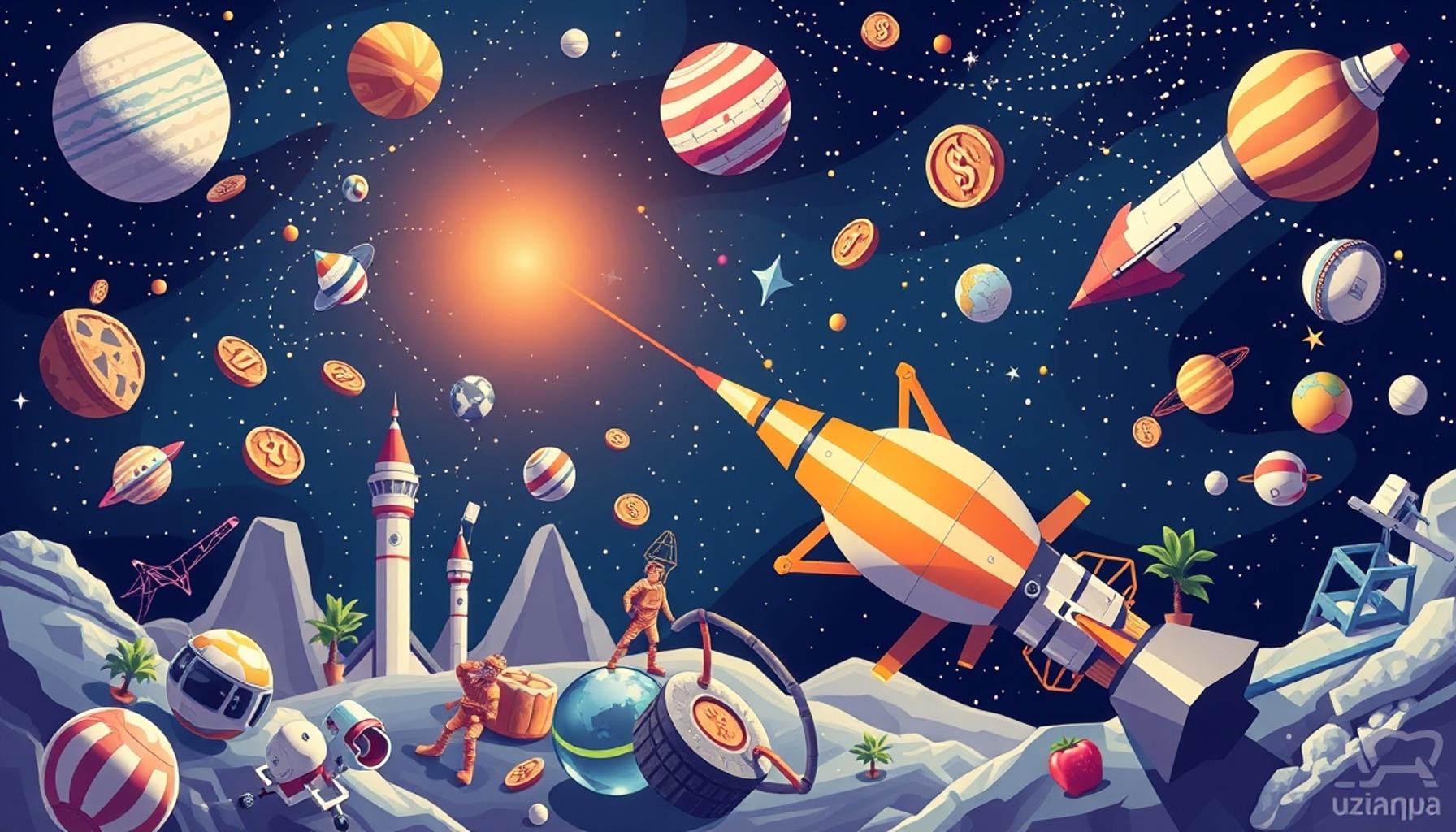
The universe is a magnificent and boundless expanse filled with mysteries and wonders that have long captivated human curiosity. From the shimmering stars scattered across the night sky to the intricate dance of celestial bodies, space offers an endless source of intrigue for scientists and dreamers alike. As advancements in technology continue to shape our understanding of the cosmos, space exploration remains a dynamic field, driving new scientific inquiry and discovery.
Presently, several ambitious missions are underway that will profoundly influence our comprehension of outer space. Notable among these pursuits are:
- Artemis Program: This NASA-led initiative aims to return humans to the Moon by 2024, with the ultimate goal of establishing a sustainable presence there by the end of the decade. The program not only aims to land the first woman and next man on the lunar surface but also to lay the groundwork for future human exploration of Mars.
- James Webb Space Telescope: Scheduled for launch, this powerful telescope promises to offer unprecedented views of distant galaxies, star formations, and potentially habitable exoplanets. It is designed to observe the universe’s earliest epochs, allowing scientists to peel back the layers of cosmic history.
- Mars Sample Return Mission: Developed through collaboration between NASA and the European Space Agency, this mission aspires to collect samples from the Martian surface and return them to Earth. By analyzing these samples, scientists hope to gain insights into Mars’ geology and the potential for past life on the planet.
In conjunction with these pioneering missions, innovative technologies are transforming our approach to space exploration. Among the most promising advancements are:
- Reusable Rockets: Companies like SpaceX have revolutionized space travel with reusable launch systems, drastically lowering the cost of access to space. The Falcon 9 rocket, for example, can return to Earth post-launch, landing vertically and being refurbished for subsequent missions.
- Artificial Intelligence: AI technologies play a crucial role in enhancing data analysis and facilitating autonomous operations of spacecraft. By employing AI, missions can manage real-time decision-making processes, reducing human error and optimizing results in often unpredictable environments.
- 3D Printing: This technology holds enormous potential for extended space missions. It enables astronauts to fabricate tools, parts, and even entire structures on-demand in space, thereby minimizing the need to transport heavy materials from Earth.
As mankind embarks on this journey into the deeper reaches of the cosmos, the exciting combination of groundbreaking missions and state-of-the-art technology will surely yield remarkable discoveries. These advancements not only expand our knowledge of the universe but also inspire future generations to continue exploring the timeless questions of existence, life’s potential on other planets, and the fundamental laws that govern our universe.
DIVE DEEPER: Click here to uncover the future of information security
Current Missions Shaping Our Understanding of Space
The excitement surrounding space exploration is palpable as we witness a remarkable convergence of dedicated missions and innovative technologies. Each initiative is meticulously designed not only to expand our understanding of the universe but also to prepare for future deep-space exploration. Let’s delve into some of the most significant missions currently making waves in the space community.
The Artemis Program: A New Era for Lunar Exploration
The Artemis Program stands as a cornerstone of NASA’s lunar exploration efforts, aiming to land the first woman and the next man on the Moon by 2024. This ambitious initiative is more than just a journey to our satellite; it seeks to establish a sustainable human presence on the lunar surface by the end of the decade. The program’s long-term vision includes deep-space missions that extend to Mars, making Artemis a critical stepping stone for humanity’s interplanetary aspirations. As part of the program, NASA is developing the Orion spacecraft and the Space Launch System (SLS), which are engineered to support crewed missions beyond low Earth orbit. The Artemis missions will not only enhance our scientific knowledge but also inspire generations to come, showcasing what can be achieved when we push the boundaries of exploration.
James Webb Space Telescope: Unveiling Cosmic Mysteries
Scheduled for launch, the James Webb Space Telescope is set to become the premier observatory of the next decade. With its powerful instruments, this telescope offers an unparalleled opportunity to observe the universe’s first galaxies, explore star formation, and even identify potentially habitable exoplanets. Unlike its predecessor, the Hubble Space Telescope, Webb operates in the infrared spectrum, allowing it to peer through dust clouds and unveil the hidden processes shaping celestial phenomena. Its ability to capture details of distant objects will undoubtedly provide valuable insights into the formation of stars and the evolution of galaxies, thereby unlocking secrets that have remained elusive for centuries.
Mars Sample Return Mission: The Quest for Evidence of Life
The Mars Sample Return Mission represents an extraordinary collaboration between NASA and the European Space Agency. This mission’s primary objective is to collect samples from the Martian surface and return them to Earth for analysis. By studying these samples, scientists hope to uncover clues about Mars’ geology and examine the potential for past life. This mission not only signifies a technological triumph but also offers a profound opportunity to answer fundamental questions about our neighboring planet. The complexities of collecting and returning samples from Mars emphasize the ingenuity required in overcoming the challenges posed by interplanetary travel.
As we look forward to the outcomes of these extraordinary missions, it is clear that they will set the foundation for future exploration. Each program carries the potential not only for scientific discovery but also for deepening our understanding of humanity’s place in the cosmos. With each technological advancement, we close the gap between our dreams of exploration and the reality of venturing into the great unknown.
DIVE DEEPER: Click here to gain insights
Innovative Technologies Driving Space Exploration Forward
The landscape of space exploration is not only shaped by ambitious missions but also by groundbreaking technologies that are pushing the limits of what is possible. As scientists and engineers work hand-in-hand, several cutting-edge developments are often overlooked that are crucial for enhancing our capabilities in exploring space. Below, we explore some key technologies that are revolutionizing how we explore the universe.
Reusable Rockets: Reducing Costs and Enhancing Accessibility
The advent of reusable rocket technology has transformed the economics of space travel. Companies like SpaceX have pioneered this approach, with their Falcon 9 rocket capable of returning to Earth and being refurbished for multiple launches. This innovative system significantly reduces the costs associated with sending payloads into orbit, creating a new era of accessibility for both scientific missions and commercial endeavors. For instance, launching satellites, resupplying the International Space Station (ISS), and even plans for future moon landings have become more economically viable, leading to an uptick in private-sector participation in space exploration.
Advanced Propulsion Systems: The Future of Deep Space Travel
The quest for faster and more efficient travel to distant destinations has led to the development of advanced propulsion systems. One notable example is NASA’s ion propulsion technology, which uses electric fields to accelerate ions and generate thrust. This system, already utilized in missions like the Dawn spacecraft, allows for prolonged operations and efficient fuel consumption. Unlike traditional chemical rockets, which provide short bursts of speed, ion propulsion enables continuous thrust over extended periods, making it ideal for long-duration missions to destinations like Mars and beyond.
Artificial Intelligence: Enhancing Decision-Making in Space Missions
Artificial intelligence (AI) is starting to play a crucial role in optimizing mission operations and ensuring the safety of astronauts. AI algorithms can analyze vast amounts of data in real time, helping mission control teams make quicker and more informed decisions. For example, NASA’s Perseverance rover on Mars is equipped with AI that enables it to autonomously navigate the Martian terrain, identify scientific targets, and select how to execute its experiments. This capacity for autonomous decision-making reduces the communication gap between Earth and Mars, allowing for timely responses to rapidly changing conditions on the surface.
3D Printing in Space: Building the Future on Other Worlds
Addressing the limitations of transporting materials across vast distances, 3D printing technology is emerging as a transformative tool in space exploration. By allowing astronauts to manufacture necessary tools, parts, and even habitat components on-site, this technology minimizes the need to launch large supplies from Earth. Projects like NASA’s Made In Space initiative demonstrate the feasibility of using 3D printing to create items in microgravity environments. This capability not only enhances self-sufficiency during long missions but also paves the way for sustainable living on other planets.
As we forge ahead into the cosmos, these technologies exemplify the ingenuity and adaptability required for successful space exploration. They not only enable ambitious missions but also enhance human presence in space, turning our aspirations into tangible realities. The ongoing integration of these innovations marks a pivotal moment for humanity as we take significant strides towards a deeper understanding of the universe and our role within it.
DISCOVER MORE: Click here to learn how to apply for the Emirates Skywards Rewards World Elite Mastercard</a
Looking Ahead: The Future of Space Exploration
As we reflect on the recent advances and ongoing missions in space exploration, it’s clear that we stand at the threshold of a new era. The combination of innovative technologies—like reusable rockets, advanced propulsion systems, artificial intelligence, and 3D printing—is set to redefine our ability to not only reach destinations beyond Earth but to thrive there. These developments allow us to reduce costs, enhance operational efficiency, and foster sustainability in our missions.
The future is bright with possibilities; upcoming projects aiming for Mars, lunar bases, and even astrobiological studies on distant exoplanets will rely heavily on these technologies. Moreover, the increasing collaboration between governmental space agencies and private enterprises will further accelerate our progress. As we venture into the stars, these partnerships harness collective expertise and resources, ensuring that exploration is accessible and beneficial for all.
Ultimately, space exploration is more than just a technical endeavor; it is an inspiring journey that unites humanity with a shared purpose of discovery and understanding. As we continue to innovate and adapt, our quests will not only unravel the mysteries of the universe but also address critical challenges we face on Earth. The advancements we achieve today in space exploration will echo throughout generations, reminding us of our innate drive to seek knowledge and transcend our limits. Together, we are preparing for a future where the sky is no longer the limit, but just the beginning.

Linda Carter
Linda Carter is a writer and expert known for producing clear, engaging, and easy-to-understand content. With solid experience guiding people in achieving their goals, she shares valuable insights and practical guidance. Her mission is to support readers in making informed choices and achieving significant progress.